
Virtusa Testing Interview Questions
Technical interview
1.What is Software Testing?
2.Define SDLC Models.
3.Define Defect Life Cycle.
4.Why Software Tester is needed?
4a.Assume - If I am having 100 efficient Developers, then why should I need a Software Tester?
5.Define STLC Life Cycle.
6.Why Software testing process is needed?
Showing posts with label testing interview faqs. Show all posts
Showing posts with label testing interview faqs. Show all posts
Testing Interview Question Part -2
Testing Interview Question Part -2
111.Difference between bug,error and defect?
112.Explain about MicroSoft Six Rules Standard for User Interface testing?
113.Explain about use case document ?
114.Explain me the phases of STLC and explain each one briefly?
115.Give exact and appropriate definition of testing?
116.How many modes of recording are there ?
117.How to add objects to the Object Rpository?
118.How to arrive Testcase? and How to write Testcase in Email id? when we go for winrunner and why we go for?
119.How to carry out manual testing for a background process which does't have any user interface ?
120.How to do regression testing, and can give one or two examples on that in the same application?
121.How to test the Microsoft Word 2003? What all the major areas to be tested, please explain?
122.How to write a testcase and bugreport?plz expln with an example?
123.How will you review the test case and How many types are there ?
124.Share a particular project where you have been able to learn enough skills to help with testing?
125.The role of both QA & QC?
126.What are GET TO , SETTO,and GET RO properties in QTP?
127.What are the difference between per text mode and shared mode in qtp ?
128.What are the objectives of Lowlevel recording? What is Elapsed Time? When we use Update mode?
129.What are the objectives of Utility objects?
130.What are the objectives of debugging?
131.What are the processes followed in your company for automation?
132.What do you mean by Pilot Testing?
133.What is AUT?
134.What is BUG Life cycle?
135.What is Black Box Testing?
136.What is FSO can you explain?
137.What is Review?
138.What is SRS and BRS document?Can you explain them briefly?
139.What is SRS and BRS in manual testing?
140.What is STLC How many phases are there can you explain them?
141.What is Sanity Test, Adhoc Testing & Smoke Testing? When will use the Above Tests?
142.What is V model can u explain ?
143.What is V model in manual testing ?
144.What is a frame work at what situations we will use?
145.What is a test plan who will prepare that one?
146.What is alpha tesging and beta testing ?
147.What is application entry and exit criteria?
148.What is compatibility testing?
149.What is debugging?
150.What is determination?
151.What is exact difference between Debugging & Testing?
152.What is fish model can you explain?
153.What is frame work in qtp?
154.What is functional testing,system testing,datadriven testing?
155.What is integration testing?
156.What is mean by gui testing ? What is mean by client/Server? What is meant by web based application ?
157.What is objective of actions in qtp ?
158.What is performance testing?
159.What is port testing?
160.What is prototype model in manual testing?
161.What is regualr expression and when we will use regularexpression in qtp?
162.What is reusable action in qtp?
163.What is stand alone mode running in load runner?
164.What is stress testing?
165.What is stub and driver in manual testing?
166.What is system testing?
167.What is test bed?
168.What is test development?
169.What is test metrics ?
170.What is test strategy who will prepare that one. And what will be there in test strategy?
171.What is the Testcase Life Cycle?
172.What is the definition for test life cycle?
173.What is the difference between constant and parameter in qtp?
174.What is the difference between properties and methods in qtp?
175.What is the difference between smoke testing and sanitary testing ?
176.What is the difference between test scenarios and test strategy?
177.What is the difference between usability testing and GUI?
178.What is the model of spiral binding in manual testing? Can you explain spiral binding?
179.What is unit testing in manual?
180.What is unit testing?
181.What is virtual memory?
182.What is virtual object and at what we will use virtual object in qtp?
183.What is virtual object and when will we use?
184.What is visual source safe?
185.What part of the testing phase is the most important part for testing in the cycle?
186.What type of testing questions will be asked for 2+ yrs exssp people in interview?
187.When we do update mode in qtp?
188.Where do check points store in qtp ?
189.Who are prepared use case?
190.Why do need synchronization in qtp?
191.Why do u use object spy in qtp?
192.can u explain spiral binding model in manual testing developers looking to do= testing?
193.How i can do gui testing,what is its important contant,plz tell me all property of Gui testing?
194.How to wrtie test case with a minimum of 13 columns?
195.supports Java Script? What is extention for test script in Quick Test?
196.what is the Testcase Life Cycle ?
197.what is the differene between scenario and testcase ?
198.whta is open beta testing? ans it done at which end? what is the difference b/w open beta testing and beta testing?
199.why do u save .vbs in library files in qtp winrunner?
200.What is joins and define all the joins?
201.What is Foreign key ?
202.Write an SQL query if u want to select the data from one block which intern reflects another block ?
203.Which command is used to run an interface?
204.How will you see the hidden file ?
205.What is the command used to set the date and timings?
206.Some basic commands like copy, move,delete ?
207.Which command used to the go back to the home directory?
208.Which command used to view the the current directory?
209.Where u maintains the Repositories?
210.What is CVS?
211.Bug Tool used?
212.How will you prepare traceability matrix if there is no Business Doc and Functional Doc?
213.How will you validate the functionality of the Test cases, if there is no business equirement document or user requirement document as such?
214.Testing process followed in your company?
215.what are steps that to be followed to achieve the CMM -IV standards?
216.What is Back End testing?
217.What is Unit Testing?
218.How will u write test cases for an given scenario i.e. main page, login screen, transaction, Report Verification?
219.How will u write traceability matrix?
220.What is CVS and why it is used?
221.What will be specified in the Defect Report…?
222.What is Test summary Repor?
223.What is Test Closure report?
224.Explain Defect life cycle?
225.What will be specified in the Test Case?
226.What are the Testing methodologies that u have followed in your project ?
227.What kind of testing that u have been involved in and explain about it?
228.What is UAT Testing?
229.What is joins and what are the different types of joins in SQL and explain the same?
230.What is Foreign Key in SQL?
231.Bug life cycle?
232.Explain about the Project? And draw the architecture of your project?
233.what are the different types of severity?
234.Defect tracking tools used?
235.what are the responsibilities of an tester?
236.Give some example How will you write the test cases if an scenario involves Login
237.screen?
238.What are the different types of testing followed?
239.What are the different levels of testing used during testing the application?
240.What type of testing will be done in Installation testing or system testing?
241.What is meant by CMMI …what are different types of CMM Level?
242.Explain about the components involved in CMM-4 level?
243.Explain about Performance testing ?
244.What is Traceability matrix and How it is done ?
245.How can you differentiate Severity and Priority based on technical and business point
246.of view.
247.What is the difference between Test life cycle and defect life cycle ?
248.How will u ensure that you have covered all the functionality while writing test
249.cases if there is no functional spec and there is no KT about the application?
250.What is SCORM?
251.What is Sec 508?
252.Have u done any portal testing?
253.DO u have any idea about LMS or LCMS?
254.Have u done any compliance testing
255.Have u done any compatibility testing?
256.What are the critical issues found while testing the projects in your organization?
257.How do you test a flash file?
258.Have u find any difference while testing a flash file and Html file?
259.What types of testing do u aware of?
260.While doing the compatibility testing have u found any critical issues?
261.While doing the compliance testing has u noticed any critical/ abnormal issues?
262.What is the procedure u use while doing the Regression testing in your projects?
263.Is ur testing is conventional or non-conventional?
264.Have u done any other lang’s courses testing? If yes have u faced in any critical situations?
265.What are things to be more concentrated while testing same projects on differentenvironments?
267.What are AICC standards?
268.Test Passes:
269.What is meant by Test Passes? How many passes are required for Integration testing?
270.Automation Framework:
271.What are the driving parameters for automation framework?
272.Relation between Test Cases, Requirements and Defects:
273.How will you trace the relation between test cases, requirements and defects?
274.Testing Cycle and Testing Process:
275.Explain what is testing cycle and testing process and what are stages involved in each?
111.Difference between bug,error and defect?
112.Explain about MicroSoft Six Rules Standard for User Interface testing?
113.Explain about use case document ?
114.Explain me the phases of STLC and explain each one briefly?
115.Give exact and appropriate definition of testing?
116.How many modes of recording are there ?
117.How to add objects to the Object Rpository?
118.How to arrive Testcase? and How to write Testcase in Email id? when we go for winrunner and why we go for?
119.How to carry out manual testing for a background process which does't have any user interface ?
120.How to do regression testing, and can give one or two examples on that in the same application?
121.How to test the Microsoft Word 2003? What all the major areas to be tested, please explain?
122.How to write a testcase and bugreport?plz expln with an example?
123.How will you review the test case and How many types are there ?
124.Share a particular project where you have been able to learn enough skills to help with testing?
125.The role of both QA & QC?
126.What are GET TO , SETTO,and GET RO properties in QTP?
127.What are the difference between per text mode and shared mode in qtp ?
128.What are the objectives of Lowlevel recording? What is Elapsed Time? When we use Update mode?
129.What are the objectives of Utility objects?
130.What are the objectives of debugging?
131.What are the processes followed in your company for automation?
132.What do you mean by Pilot Testing?
133.What is AUT?
134.What is BUG Life cycle?
135.What is Black Box Testing?
136.What is FSO can you explain?
137.What is Review?
138.What is SRS and BRS document?Can you explain them briefly?
139.What is SRS and BRS in manual testing?
140.What is STLC How many phases are there can you explain them?
141.What is Sanity Test, Adhoc Testing & Smoke Testing? When will use the Above Tests?
142.What is V model can u explain ?
143.What is V model in manual testing ?
144.What is a frame work at what situations we will use?
145.What is a test plan who will prepare that one?
146.What is alpha tesging and beta testing ?
147.What is application entry and exit criteria?
148.What is compatibility testing?
149.What is debugging?
150.What is determination?
151.What is exact difference between Debugging & Testing?
152.What is fish model can you explain?
153.What is frame work in qtp?
154.What is functional testing,system testing,datadriven testing?
155.What is integration testing?
156.What is mean by gui testing ? What is mean by client/Server? What is meant by web based application ?
157.What is objective of actions in qtp ?
158.What is performance testing?
159.What is port testing?
160.What is prototype model in manual testing?
161.What is regualr expression and when we will use regularexpression in qtp?
162.What is reusable action in qtp?
163.What is stand alone mode running in load runner?
164.What is stress testing?
165.What is stub and driver in manual testing?
166.What is system testing?
167.What is test bed?
168.What is test development?
169.What is test metrics ?
170.What is test strategy who will prepare that one. And what will be there in test strategy?
171.What is the Testcase Life Cycle?
172.What is the definition for test life cycle?
173.What is the difference between constant and parameter in qtp?
174.What is the difference between properties and methods in qtp?
175.What is the difference between smoke testing and sanitary testing ?
176.What is the difference between test scenarios and test strategy?
177.What is the difference between usability testing and GUI?
178.What is the model of spiral binding in manual testing? Can you explain spiral binding?
179.What is unit testing in manual?
180.What is unit testing?
181.What is virtual memory?
182.What is virtual object and at what we will use virtual object in qtp?
183.What is virtual object and when will we use?
184.What is visual source safe?
185.What part of the testing phase is the most important part for testing in the cycle?
186.What type of testing questions will be asked for 2+ yrs exssp people in interview?
187.When we do update mode in qtp?
188.Where do check points store in qtp ?
189.Who are prepared use case?
190.Why do need synchronization in qtp?
191.Why do u use object spy in qtp?
192.can u explain spiral binding model in manual testing developers looking to do= testing?
193.How i can do gui testing,what is its important contant,plz tell me all property of Gui testing?
194.How to wrtie test case with a minimum of 13 columns?
195.supports Java Script? What is extention for test script in Quick Test?
196.what is the Testcase Life Cycle ?
197.what is the differene between scenario and testcase ?
198.whta is open beta testing? ans it done at which end? what is the difference b/w open beta testing and beta testing?
199.why do u save .vbs in library files in qtp winrunner?
200.What is joins and define all the joins?
201.What is Foreign key ?
202.Write an SQL query if u want to select the data from one block which intern reflects another block ?
203.Which command is used to run an interface?
204.How will you see the hidden file ?
205.What is the command used to set the date and timings?
206.Some basic commands like copy, move,delete ?
207.Which command used to the go back to the home directory?
208.Which command used to view the the current directory?
209.Where u maintains the Repositories?
210.What is CVS?
211.Bug Tool used?
212.How will you prepare traceability matrix if there is no Business Doc and Functional Doc?
213.How will you validate the functionality of the Test cases, if there is no business equirement document or user requirement document as such?
214.Testing process followed in your company?
215.what are steps that to be followed to achieve the CMM -IV standards?
216.What is Back End testing?
217.What is Unit Testing?
218.How will u write test cases for an given scenario i.e. main page, login screen, transaction, Report Verification?
219.How will u write traceability matrix?
220.What is CVS and why it is used?
221.What will be specified in the Defect Report…?
222.What is Test summary Repor?
223.What is Test Closure report?
224.Explain Defect life cycle?
225.What will be specified in the Test Case?
226.What are the Testing methodologies that u have followed in your project ?
227.What kind of testing that u have been involved in and explain about it?
228.What is UAT Testing?
229.What is joins and what are the different types of joins in SQL and explain the same?
230.What is Foreign Key in SQL?
231.Bug life cycle?
232.Explain about the Project? And draw the architecture of your project?
233.what are the different types of severity?
234.Defect tracking tools used?
235.what are the responsibilities of an tester?
236.Give some example How will you write the test cases if an scenario involves Login
237.screen?
238.What are the different types of testing followed?
239.What are the different levels of testing used during testing the application?
240.What type of testing will be done in Installation testing or system testing?
241.What is meant by CMMI …what are different types of CMM Level?
242.Explain about the components involved in CMM-4 level?
243.Explain about Performance testing ?
244.What is Traceability matrix and How it is done ?
245.How can you differentiate Severity and Priority based on technical and business point
246.of view.
247.What is the difference between Test life cycle and defect life cycle ?
248.How will u ensure that you have covered all the functionality while writing test
249.cases if there is no functional spec and there is no KT about the application?
250.What is SCORM?
251.What is Sec 508?
252.Have u done any portal testing?
253.DO u have any idea about LMS or LCMS?
254.Have u done any compliance testing
255.Have u done any compatibility testing?
256.What are the critical issues found while testing the projects in your organization?
257.How do you test a flash file?
258.Have u find any difference while testing a flash file and Html file?
259.What types of testing do u aware of?
260.While doing the compatibility testing have u found any critical issues?
261.While doing the compliance testing has u noticed any critical/ abnormal issues?
262.What is the procedure u use while doing the Regression testing in your projects?
263.Is ur testing is conventional or non-conventional?
264.Have u done any other lang’s courses testing? If yes have u faced in any critical situations?
265.What are things to be more concentrated while testing same projects on differentenvironments?
267.What are AICC standards?
268.Test Passes:
269.What is meant by Test Passes? How many passes are required for Integration testing?
270.Automation Framework:
271.What are the driving parameters for automation framework?
272.Relation between Test Cases, Requirements and Defects:
273.How will you trace the relation between test cases, requirements and defects?
274.Testing Cycle and Testing Process:
275.Explain what is testing cycle and testing process and what are stages involved in each?
Testing Interview questions and answers
Testing Interview questions and answers,Testing faqs
1.How many trigger events are there in recovery operation?
4
1) Popup Window 2) Object State 3) Application Crash 4) Test Run Error.
2. How many types are there to split the actions?
1)Independent and
2)Nested (Parent-Child.)
3. What is meant by Source Control?
4. Give one example where you have used Regular Expression?
05/19/2004 (mm/dd/yyyy)
RegularExpression:[0-1][0-9]/[0-3][0-9]/200[0-9]
5.How to instruct QTP to display errors and other description in the test results instead of halting execution by throwing error in the mid of execution due to an error (for example Object not found)?
1)Recovery Scenario
2)LogFiles
6.What is the Extension For Shared Object Repository
.tsr
7. What is the default Sync time out.
20000 ms
8. What is the Difference between SystemUtil And InvokeApplication?
1)Using SystemUtil we can make use of the different methods such as Run or Close , whereas in InvokeApplication we can only open the apllication.
2)InvokeApplication method can open only executable files
9.What is the Difference Between GetRo Property and GetToProperties?
1)You use the GetROProperty method to retrieve the current value of a test object property from a run-time object in your application
2) GetTo Property Returns the collection of properties and values used to identify the object.
10. What is the Difference Between Call to copy of Action and Call to Existing Action?
If u do any Enhancements in Existing Action It will Affect to the Main Tests where as in the Copy of Action ,The Main Test will not Get Affected.
11. What is the extension for ‘Per Action’ object Repository?
.mtr
12. How Object Repository will Learn the Objects from Application?
Based on Physical Desc And the logical Name
13. How many types are there in Run Mode?
2
1)Fast 2) Normal
14. How do You Change the Logical Name of the Object in Test Script?
By Renaming the object in The Repository.
15. What is the Diffrence Between the Wait and sync Time?
"Wait" statement is used to instruct QuickTest to wait for a window to open or an object to appear.where as "Sync" Waits for the browser to complete the current navigation.
1.How many trigger events are there in recovery operation?
4
1) Popup Window 2) Object State 3) Application Crash 4) Test Run Error.
2. How many types are there to split the actions?
1)Independent and
2)Nested (Parent-Child.)
3. What is meant by Source Control?
4. Give one example where you have used Regular Expression?
05/19/2004 (mm/dd/yyyy)
RegularExpression:[0-1][0-9]/[0-3][0-9]/200[0-9]
5.How to instruct QTP to display errors and other description in the test results instead of halting execution by throwing error in the mid of execution due to an error (for example Object not found)?
1)Recovery Scenario
2)LogFiles
6.What is the Extension For Shared Object Repository
.tsr
7. What is the default Sync time out.
20000 ms
8. What is the Difference between SystemUtil And InvokeApplication?
1)Using SystemUtil we can make use of the different methods such as Run or Close , whereas in InvokeApplication we can only open the apllication.
2)InvokeApplication method can open only executable files
9.What is the Difference Between GetRo Property and GetToProperties?
1)You use the GetROProperty method to retrieve the current value of a test object property from a run-time object in your application
2) GetTo Property Returns the collection of properties and values used to identify the object.
10. What is the Difference Between Call to copy of Action and Call to Existing Action?
If u do any Enhancements in Existing Action It will Affect to the Main Tests where as in the Copy of Action ,The Main Test will not Get Affected.
11. What is the extension for ‘Per Action’ object Repository?
.mtr
12. How Object Repository will Learn the Objects from Application?
Based on Physical Desc And the logical Name
13. How many types are there in Run Mode?
2
1)Fast 2) Normal
14. How do You Change the Logical Name of the Object in Test Script?
By Renaming the object in The Repository.
15. What is the Diffrence Between the Wait and sync Time?
"Wait" statement is used to instruct QuickTest to wait for a window to open or an object to appear.where as "Sync" Waits for the browser to complete the current navigation.
Snapshots in VMware
A snapshot is a frozen image of your virtual OS at any particular point of time. This feature is very useful for backups. In my case, when I had setup the entire Japanese Environment by installing the SQL Server 2005 Japanese and Sun Java System Application server 9.1 Multi language. The application was up and running I created a snapshot for this. Snapshots enable a tester to return to last stable environment if anything goes awry. You can create snapshots only when the Vmimage is Powered Off. The snapshot created is saved in the same folder as your VMImage. You can just revert to snapshot if your setting gets corrupted. This saves time of the testers of uninstalling and installing or setting the corrupted environment right.


How to add hardware resources to Vmware
Adding resources to VMWare
The most important part of VMImage is adding additional memory or hard disk or even CPU. You add these resources only when the Image is shutdown. This can be done from the VM settings.

From the Hardware Tab you can add resources to it, like Memory can be increased to 1024 mb which is by default 384 MB. You can even allocate two processors to your VM Machine if your host machine is capable of supporting this. This option of adding additional Processor was very useful for me. As we were doing Japanese Testing and our application was such that with single CPU it was using 100% CPU. This resulted in VMImage being very slow. So we just shutdown the VM Image and through the VM->Settings we just changes the Number of processors from one to two, then restarted the Virtual Image. And Great!!!! It was running smoothly.

You can also add additional Hard Disk by Clicking on Add it will add new hard disk just specify size as 4 GB or anything that you want. This is just one part now Power on the VMImage. After you have logged on to the VMImage Go to Control Panel ->Administrative Tools->Computer Management->Disk Management. There you will see the newly added Hard disk listed on the right side. Select that Disk and R-Click Format. Once you have formatted it then restart the VMImage. Now this Hard Disk will be visible in My Computer.
The most important part of VMImage is adding additional memory or hard disk or even CPU. You add these resources only when the Image is shutdown. This can be done from the VM settings.

From the Hardware Tab you can add resources to it, like Memory can be increased to 1024 mb which is by default 384 MB. You can even allocate two processors to your VM Machine if your host machine is capable of supporting this. This option of adding additional Processor was very useful for me. As we were doing Japanese Testing and our application was such that with single CPU it was using 100% CPU. This resulted in VMImage being very slow. So we just shutdown the VM Image and through the VM->Settings we just changes the Number of processors from one to two, then restarted the Virtual Image. And Great!!!! It was running smoothly.

You can also add additional Hard Disk by Clicking on Add it will add new hard disk just specify size as 4 GB or anything that you want. This is just one part now Power on the VMImage. After you have logged on to the VMImage Go to Control Panel ->Administrative Tools->Computer Management->Disk Management. There you will see the newly added Hard disk listed on the right side. Select that Disk and R-Click Format. Once you have formatted it then restart the VMImage. Now this Hard Disk will be visible in My Computer.
What is VMWare used for?
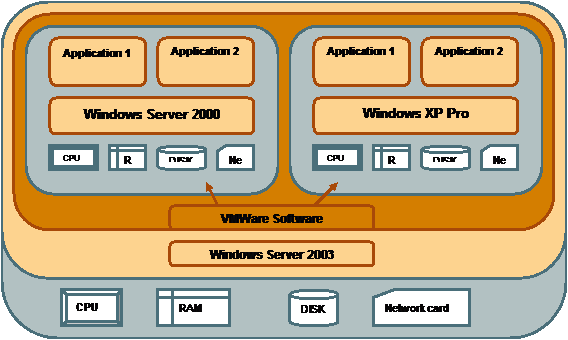
VMWare is virtualisation software. In simple terms, VMWare Workstation allows one physical machine to run two or more operating systems simultaneously. The machine on which the Vmware software runs is called the Host Machine. Within this software you can create and run virtual operating systems known as VMImages. The figure below shows two Vmimages of Windows Server 2000 and Windows XP Pro being run on host Windows Server 2003 machine.

Different Tool for test design and data generation
Testing tools available
This article was shared with us by Ashwin Palaparthi from TestersDesk.com. TesterDesk provides a free tool for the Testing Community to help Test Design and Test Data Generation activities. Imagine…
1. A test case has to be executed on 4 browsers, in 2 resolutions, in 3 different modes on 3 Operating Systems. We are then talking about 4 * 2 * 3 * 3 = 72 Test Combinations – besides our experience about the past defect combinations, we do need a technique/tool to reduce this number into a manageable one.
2. Imagine you have to select 4 items out of 10 possible test inputs. 10 C 4 combinations are possible, but what are they?
3. You have to apply traditional Boundary Value Analysis on 4 fields in a test transaction. Taking the general min-1, min, min+1, mid, max-1, max, max+1 (7 values), we have 7 * 7 * 7 * 7 = 2401 was of testing them. Can we?
4. You need quickly 4 files of sizes 5 MB, 6 MB, 10 MB and 20 MB in text and in binary formats. How do we create them?
5. You need different real person names, e-mails with valid syntax, test credit card numbers that pass the Lehn check, etc. Where do we go today?
Welcome to www.TestersDesk.com - The One-source Online Toolkit for Software Test Design and Test Data Generation. The outputs provided can be used by Manual Testers as well as Test Automation Engineers (by copying the CSV formats in to their tool’s Data Tables).
It is web-based and is free for use. It has won several awards recently and several thousands of testers use it in small and big ways.
Please read - Discover 20 ways to use TestersDesk.com - http://www.testersdesk.com/20ways_testersdesk.html
If you have time, please view the videos at - https://www.testersdesk.com/testersdesk_videos.html
There are about 20 tools currently and will continue to grow, to serve the testing community.
This article was shared with us by Ashwin Palaparthi from TestersDesk.com. TesterDesk provides a free tool for the Testing Community to help Test Design and Test Data Generation activities. Imagine…
1. A test case has to be executed on 4 browsers, in 2 resolutions, in 3 different modes on 3 Operating Systems. We are then talking about 4 * 2 * 3 * 3 = 72 Test Combinations – besides our experience about the past defect combinations, we do need a technique/tool to reduce this number into a manageable one.
2. Imagine you have to select 4 items out of 10 possible test inputs. 10 C 4 combinations are possible, but what are they?
3. You have to apply traditional Boundary Value Analysis on 4 fields in a test transaction. Taking the general min-1, min, min+1, mid, max-1, max, max+1 (7 values), we have 7 * 7 * 7 * 7 = 2401 was of testing them. Can we?
4. You need quickly 4 files of sizes 5 MB, 6 MB, 10 MB and 20 MB in text and in binary formats. How do we create them?
5. You need different real person names, e-mails with valid syntax, test credit card numbers that pass the Lehn check, etc. Where do we go today?
Welcome to www.TestersDesk.com - The One-source Online Toolkit for Software Test Design and Test Data Generation. The outputs provided can be used by Manual Testers as well as Test Automation Engineers (by copying the CSV formats in to their tool’s Data Tables).
It is web-based and is free for use. It has won several awards recently and several thousands of testers use it in small and big ways.
Please read - Discover 20 ways to use TestersDesk.com - http://www.testersdesk.com/20ways_testersdesk.html
If you have time, please view the videos at - https://www.testersdesk.com/testersdesk_videos.html
There are about 20 tools currently and will continue to grow, to serve the testing community.
Different Tool for test design and data generation
Testing tools available
This article was shared with us by Ashwin Palaparthi from TestersDesk.com. TesterDesk provides a free tool for the Testing Community to help Test Design and Test Data Generation activities. Imagine…
1. A test case has to be executed on 4 browsers, in 2 resolutions, in 3 different modes on 3 Operating Systems. We are then talking about 4 * 2 * 3 * 3 = 72 Test Combinations – besides our experience about the past defect combinations, we do need a technique/tool to reduce this number into a manageable one.
2. Imagine you have to select 4 items out of 10 possible test inputs. 10 C 4 combinations are possible, but what are they?
3. You have to apply traditional Boundary Value Analysis on 4 fields in a test transaction. Taking the general min-1, min, min+1, mid, max-1, max, max+1 (7 values), we have 7 * 7 * 7 * 7 = 2401 was of testing them. Can we?
4. You need quickly 4 files of sizes 5 MB, 6 MB, 10 MB and 20 MB in text and in binary formats. How do we create them?
5. You need different real person names, e-mails with valid syntax, test credit card numbers that pass the Lehn check, etc. Where do we go today?
Welcome to www.TestersDesk.com - The One-source Online Toolkit for Software Test Design and Test Data Generation. The outputs provided can be used by Manual Testers as well as Test Automation Engineers (by copying the CSV formats in to their tool’s Data Tables).
It is web-based and is free for use. It has won several awards recently and several thousands of testers use it in small and big ways.
Please read - Discover 20 ways to use TestersDesk.com - http://www.testersdesk.com/20ways_testersdesk.html
If you have time, please view the videos at - https://www.testersdesk.com/testersdesk_videos.html
There are about 20 tools currently and will continue to grow, to serve the testing community.
This article was shared with us by Ashwin Palaparthi from TestersDesk.com. TesterDesk provides a free tool for the Testing Community to help Test Design and Test Data Generation activities. Imagine…
1. A test case has to be executed on 4 browsers, in 2 resolutions, in 3 different modes on 3 Operating Systems. We are then talking about 4 * 2 * 3 * 3 = 72 Test Combinations – besides our experience about the past defect combinations, we do need a technique/tool to reduce this number into a manageable one.
2. Imagine you have to select 4 items out of 10 possible test inputs. 10 C 4 combinations are possible, but what are they?
3. You have to apply traditional Boundary Value Analysis on 4 fields in a test transaction. Taking the general min-1, min, min+1, mid, max-1, max, max+1 (7 values), we have 7 * 7 * 7 * 7 = 2401 was of testing them. Can we?
4. You need quickly 4 files of sizes 5 MB, 6 MB, 10 MB and 20 MB in text and in binary formats. How do we create them?
5. You need different real person names, e-mails with valid syntax, test credit card numbers that pass the Lehn check, etc. Where do we go today?
Welcome to www.TestersDesk.com - The One-source Online Toolkit for Software Test Design and Test Data Generation. The outputs provided can be used by Manual Testers as well as Test Automation Engineers (by copying the CSV formats in to their tool’s Data Tables).
It is web-based and is free for use. It has won several awards recently and several thousands of testers use it in small and big ways.
Please read - Discover 20 ways to use TestersDesk.com - http://www.testersdesk.com/20ways_testersdesk.html
If you have time, please view the videos at - https://www.testersdesk.com/testersdesk_videos.html
There are about 20 tools currently and will continue to grow, to serve the testing community.
What is Performance Testing?
What is Performance Testing?
Performance testing is mostly used for web based applications. But in some case, memory profiling can be used for desktop applications as well. Tools such as Load tester, JMeter can create virtual hosts and can simulate the real time load on the system.
Performance testing is mostly used for web based applications. But in some case, memory profiling can be used for desktop applications as well. Tools such as Load tester, JMeter can create virtual hosts and can simulate the real time load on the system.
System Testing -Types of testing
System testing is probably the most important phase of complete testing cycle. This phase is started after the completion of other phases like Unit, Component and Integration testing. During the System Testing phase, non functional testing also comes in to picture and performance, load, stress, scalability all these types of testing are performed in this phase.
By Definition, System Testing is conducted on the complete integrated system and on a replicated production environment. System Testing also evaluates that system compliance with specific functional and non functional requirements both.
It is very important to understand that not many test cases are written for the system testing. Test cases for the system testing are derived from the architecture/design of the system, from input of the end user and by user stories. It does not make sense to exercise extensive testing in the System Testing phase, as most of the functional defects should have been caught and corrected during earlier testing phase.
Utmost care is exercised for the defects uncovered during System Testing phase and proper impact analysis should be done before fixing the defect. Some times, if business permits defects are just documented and mentioned as the known limitation instead of fixing it.
Progress of the System Testing also instills and build confidence in the product teams as this is the first phase in which product is tested with production environment.
System Testing phase also prepares team for more user centric testing i.e User Acceptance Testing.
Entry Criteria
* Unit, component and Integration test are complete
* Defects identified during these test phases are resolved and closed by QE team
* Teams have sufficient tools and resources to mimic the production environment
* Teams have sufficient tools and resources to mimic the production environment
Exit Criteria
* Test cases execution reports shows that functional and non functional requirements are met.
* Defects found during the System Testing are either fixed after doing thorough impact analysis or are documented as known limitations.
By Definition, System Testing is conducted on the complete integrated system and on a replicated production environment. System Testing also evaluates that system compliance with specific functional and non functional requirements both.
It is very important to understand that not many test cases are written for the system testing. Test cases for the system testing are derived from the architecture/design of the system, from input of the end user and by user stories. It does not make sense to exercise extensive testing in the System Testing phase, as most of the functional defects should have been caught and corrected during earlier testing phase.
Utmost care is exercised for the defects uncovered during System Testing phase and proper impact analysis should be done before fixing the defect. Some times, if business permits defects are just documented and mentioned as the known limitation instead of fixing it.
Progress of the System Testing also instills and build confidence in the product teams as this is the first phase in which product is tested with production environment.
System Testing phase also prepares team for more user centric testing i.e User Acceptance Testing.
Entry Criteria
* Unit, component and Integration test are complete
* Defects identified during these test phases are resolved and closed by QE team
* Teams have sufficient tools and resources to mimic the production environment
* Teams have sufficient tools and resources to mimic the production environment
Exit Criteria
* Test cases execution reports shows that functional and non functional requirements are met.
* Defects found during the System Testing are either fixed after doing thorough impact analysis or are documented as known limitations.
Subscribe to:
Posts (Atom)
